Guess who just got done being sick and bedridden for an entire week and still can’t really talk right?
Me. It was me.
So that was a painful and awful week I just went through. But I’m back in business now. And guess who’s also back in business?
Orphan Black. It’s Orphan Black.
This season has hit the ground running and it’s got me thinking about how awesome it is to have multiple female characters in a show. I’ve noticed this in other places as well, most notably Frozen – but also some old school mythological references. And thus the rambling begins…. There was an article making its rounds a few weeks ago from The New York Times. A focus piece on the actress Tatiana Maslany, it showcased and praised her amazing work playing multiple female (and even male) characters who are all clones. Each of the clones come from very different walks of life and a core group of “sisters” work together to discover their origins and gain autonomy in their lives.
The only way this show can be believable is because Maslany is an incredible actress. I can’t fangirl over her enough. Most who’ve watched the show speak to Maslany’s wonderful ability to create solid, well-rounded characters for each clone. The best is when one clone has to impersonate another. Maslany pulls individual ticks of the first clone through to the masquerade of the second, never letting the viewers forget that this is anything other than playacting for the character itself. Nothing is more impressive to me than when an actor can make me believe that their character is acting. Truly, Maslany deserves so many accolades for her work.
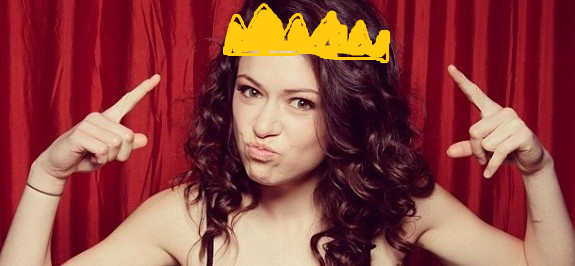
Her talent, though, only serves to reveal the true strength of the show: multiplicity in narrative. Through clones the show explores the phenomenon that is multiple experiences. Yes, the show explores religion, sexuality, government, family, personal freedom, and fate. But it is, at its core, a show that looks at different characters, their motivations, their flaws. Clones are just a convenient plot device to showcase that.
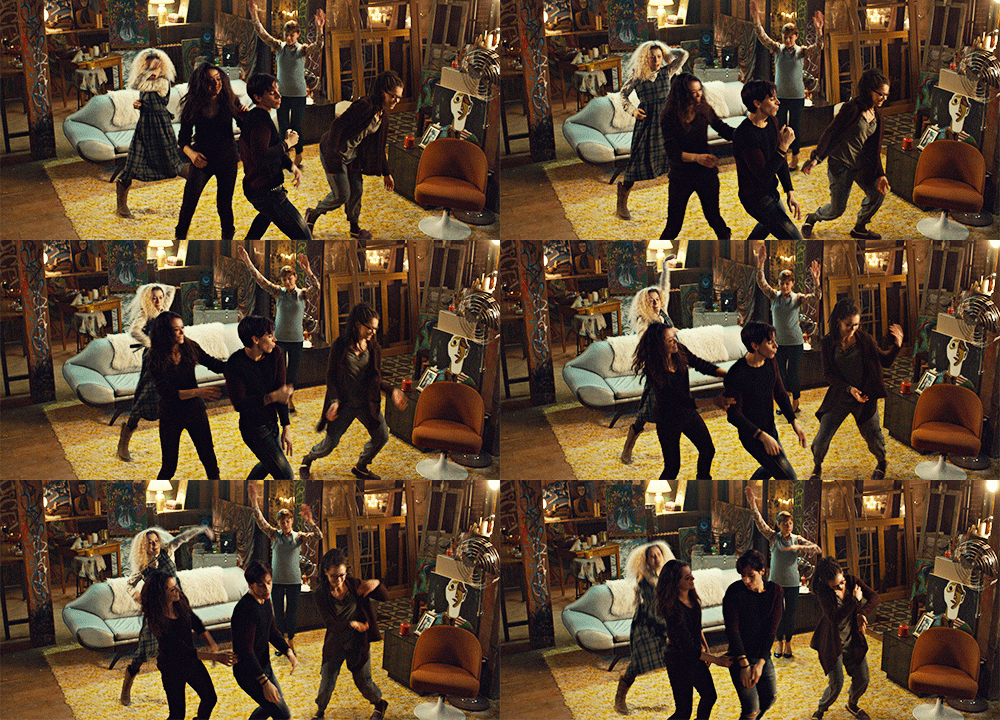
The fact that the clones are women strengthens this argument. The feminine experience has long been under represented in mainstream culture. We know so little about the feminine perspective in many eras due to lack of source material. The disproportionately few female writers and artists in history have set the precedence for the male perspective being the default. It follows then that women have been relegated to side, composite characters. Through their conglomerate nature, these characters just aren’t that interesting. As Loofbourow in the article linked above states,
Our low tolerance for difference among female characters means that they will almost always be less interesting, less memorable and less beloved than their male counterparts.
Tumblr user freezecooper compiled just three examples of one female character representing an entire gender in a squad, but we could add at least a dozen other examples in popular culture where this is the case.
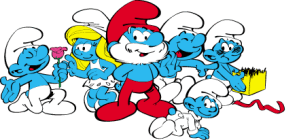
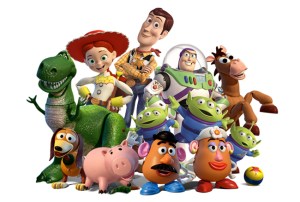
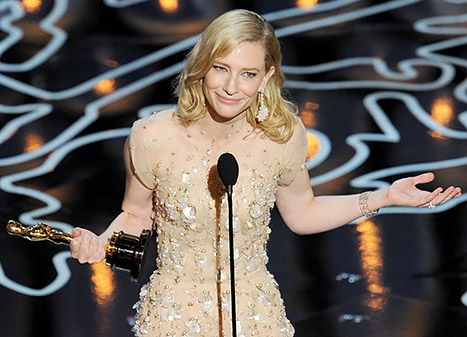
This is old news to many of you, I’m sure. And there has been an active effort in changing this. Cate Blanchett, forever lovely, said in her acceptance of the Academy Award for Best Actress in 2014,
For so bravely and intelligently distributing the film and to the audiences who went to see it and perhaps those of us in the industry who are still foolishly clinging to the idea that female films with women at the center are niche experiences. They are not. Audiences want to see them and, in fact, they earn money. The world is round, people.
There has been more focus, now more than ever, on sharing part of the spotlight with female storytellers and filmmakers. Projects like MAKERS and Women’s Media Center seek to enable, showcase, and highlight gender equality in media.
So a show like Orphan Black is tapping into this movement. It’s great, and wonderful, and I’m all about broadcasting multiple feminine experiences. But what really has me interested is that this show is doing multiple protagonists and experiences, using gender as a constant to highlight experiential multiplicity.
Sarah Manning, as the main clone featured throughout Orphan Black, was originally shown the most frequently of all the clones and drew the most emotional attention from viewers. However, I don’t think you can call her the main character anymore. Season 2 saw us spending much more time with the other clones and I honestly found myself bored when we were solely with Sarah. In addition, her primary motivation, the safety of her daughter, was taken up by many other people, including her sisters. It was hard to continue feeling like Sarah was unique or alone in this concern.
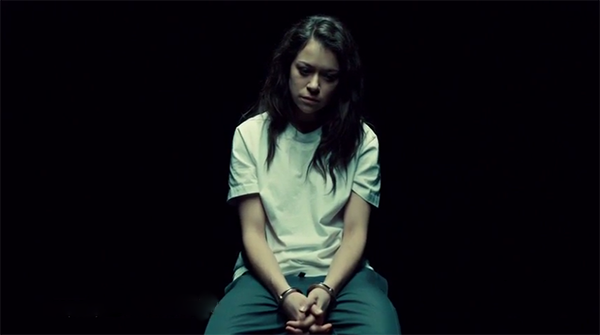
Helena and Allyson are the two sisters I felt myself much more drawn to. Even Cosima’s scientific and medical struggle were featured heavily enough that I consider her now a main character and not just the expository voice at the other end of the phone call for Sarah. The recent separation of Helena from her sisters at the end of Season 2 will only further give the writers a chance to give her equal attention.
And this is not unheard of! Ensemble cast shows have usually been successful — just look at Lost and its famous flashbacks. Almost every character, even one-offs Paulo and Nikki, get a backstory and attention. Game of Thrones also is known for its many characters and plot lines that are fun to follow. Or, if we want to go the less critical route, we can use Friends as an example. You can’t definitively say who, of all the characters between these shows, is the main character.
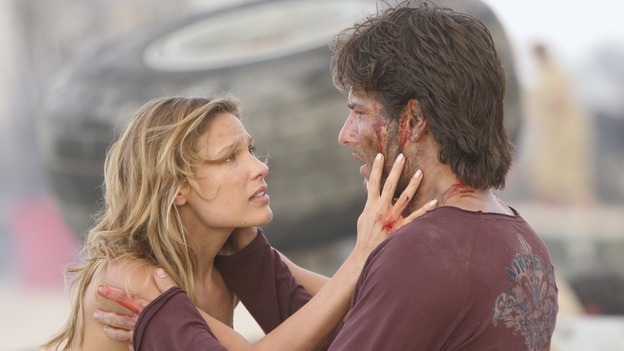
Having an ensemble cast of multiple protagonists is more engaging for viewers. There are more plot lines to watch unfold, more variable motivations to consider, more possible outcomes to speculate about…in short, there’s just more meat. There’s also a much higher likelihood that you, as a viewer, will feel represented by a character, that a certain person on the show is you. Quick: which House or family do you like you belong in in the GoT world? Who do you want to see atop the Iron Throne?

In case you didn’t know, Buzzfeed’s got you covered with multiple quizzes. I’m not going to link to them, because we have standards here at Mythic Ramblings. But also maybe because someone was not happy with their answers. (Jon Snow?! The Unsullied?!?!) Chances are, you already know the answer. It’s someone or a group that you’re just really rooting for because you feel a connection. That’s the cool, interactive part of watching or reading a series with multiple perspectives. So interesting things happen when they’re all of the same gender.
How many different types of women are featured in Orphan Black? Without spoiling anything, there’s a cop, a soccer mom, a grunge con, a lesbian scientist, a psychotic killer, a swim instructor, a dominating bitch…and those are just some of the clones we’ve seen. Also, there are female characters on the show that aren’t even clones.
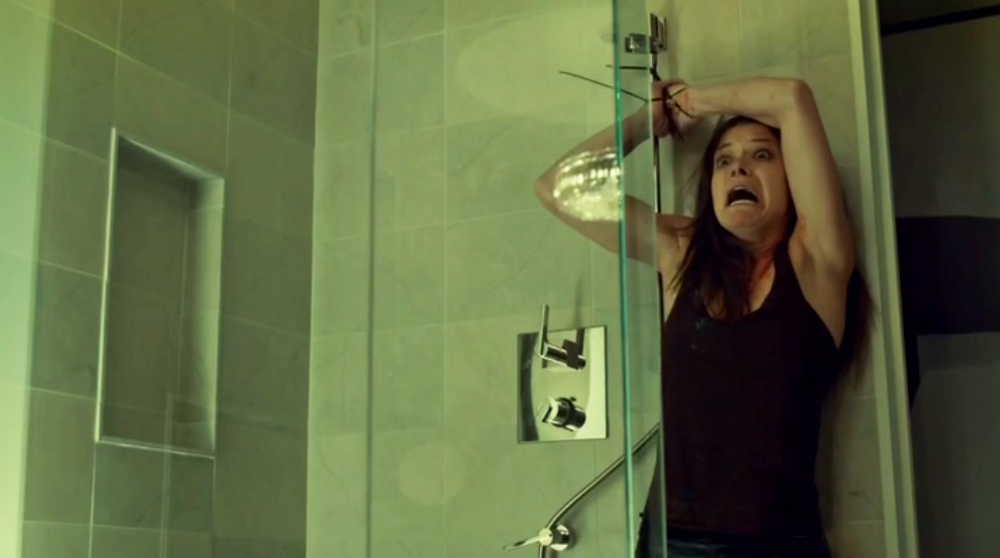
We have lots of compelling women to pick from in this show. My partner, a cisgender male, likes Alison the best because “her scenes are funniest and she’s relatable.” It is slightly curious that the clone who has a drinking problem and tortured her husband with a glue gun is “relatable” to him, but alright. I like Helena best, but I find it easy to identify with Cosima. Sometimes I want to be a con artist with awesome hair like Sarah, but other times I want Rachel’s badass reserve.
We see this same sort of “calling” of characters as “us” in Broad City, Girls, and for the older crowd out there, Sex and the City or Golden Girls. While the others arguably have a singular protagonist, Broad City is uncommon in that it has two main characters who are given equal screen time with whom we as viewers can identify, sometimes with both in the same episode.
Because this post isn’t Buzzfeed-centered enough, let’s have another quiz: which Disney princess are you? Don’t worry, Buzzfeed again has your back. Go on. Go take them. Your “revival” Mulan princess with Anna’s fashion sense mythic rambler will be here waiting.
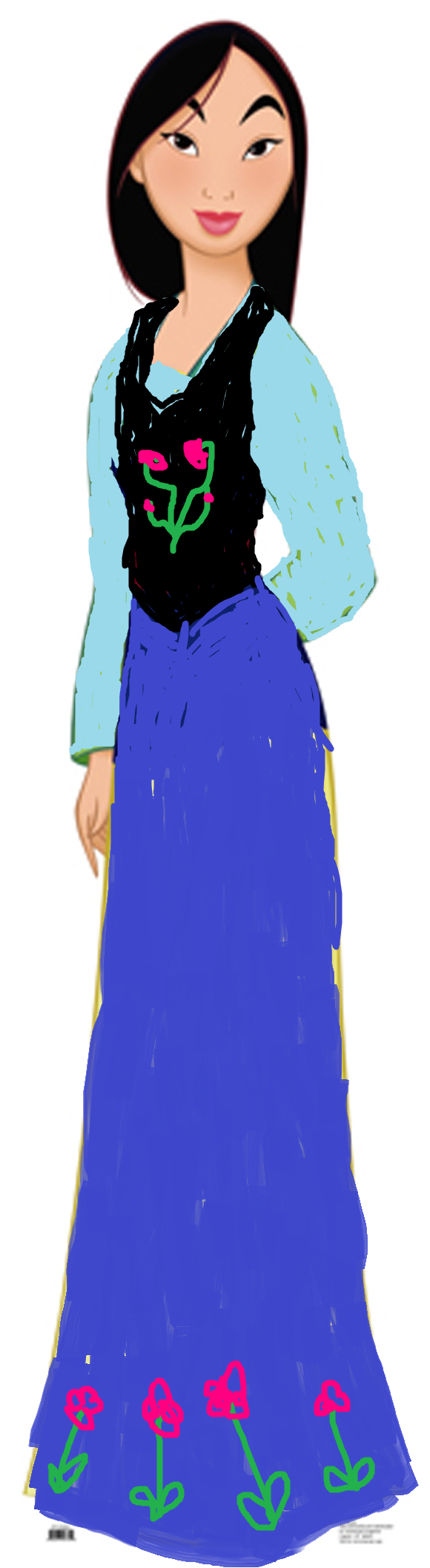
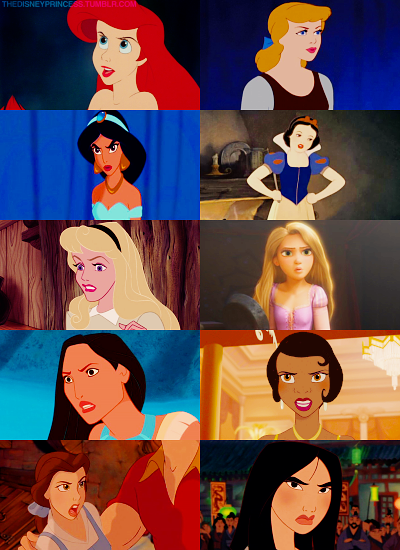
The question of which Disney princess do I identify with the most has always been hard for me (like I have to answer it frequently) because I haven’t felt like there has been adequate representation in the types of princesses. Let’s be honest, the first few Disney princesses were all the same:, sweet, animal-friendly, docile. And were there really many differences between the 90’s princesses? They were all rebellious and adventurous, wanting only to leave home. We can throw Rapunzel in there as well. The fringe princesses (Pocahantas, Mulan, Tiana, Merida, Esmeralda, Kida, and Meg) are mostly POCs and rarely get included in any assembly of the princesses.
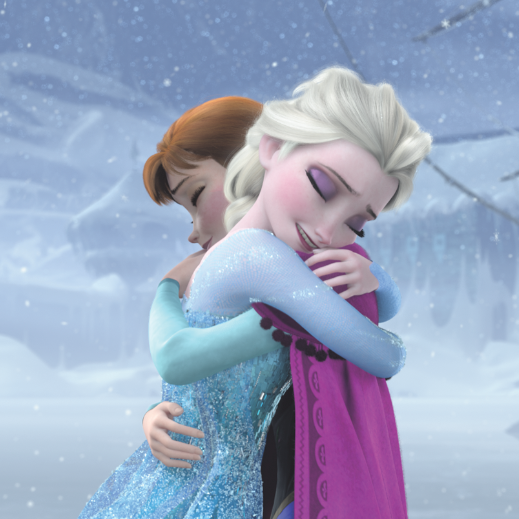
Notice I didn’t mention the newest additions to Disney royalty: Elsa and Anna from Frozen. This movie took the world by storm, becoming the highest-grossing animated film of all time. The New Yorker has a great article on some of the science and history behind how Frozen “took over” the world. In it, Konnikova mentions a study where audience members were interviewed about what exactly they loved in the film. The most popular answer: they identified with Elsa.
Everyone could interpret her in a unique way and find that the arc of her story applied directly to them.
And yet Elsa gets far less screen time than her sister and co-lead, Anna. Anna gets comedic moments, love, and adventuring. Anna gets “Do You Wanna Build a Snowman?”, the most adorable song ever that spans years and emotions. Elsa gets “Let It Go”, the song of the film, the power ballad that contains the crux of the film’s message. They each take up the two sides needed to demonstrate an act of true love. So who’s the main character?
Both of them! And that’s brilliant for viewers, especially little ones. There’s a much higher chance that a viewer will identify with at least one of the sisters in Frozen or even aspects of both than if the film was carried by just a single protagonist.
I’m not saying that there needs to be a princess, or protagonist, that I need to completely 100% identify with. But it’s just better when I see more of myself on the screen, running around and doing stuff that I don’t get to do in real life. It’s even more satisfying if I see equal but differing sides of myself metaphorically conflicting and resolving. Does that make me narcissistic? We’ll leave that for another day.
When we have multiplicity in character representations, we get fuller narratives. By limiting this multiplicity in a constant, say gender, the multiplicity itself is highlighted in a way that amplifies the diversity in responses, both on-screen and off, creating an enriched and more enjoyable narrative. And like everything in Hollywood, or even stories in general, this is not news.
When it comes to having two leads of the same gender in mythology, we see an intriguing yet sad trend in mythology and folklore; if it’s two girls then they’re enemies, if it’s boys then they’re the same. That’s usually the way it goes. And these characters have to be related in some social-familial way. Both Frozen and Orphan Black use the term “sisters.” For whatever reason, if the multiple protagonists are of the same gender and not related, then the focus of the story is on their friendship and not on exploring their valid, unique experiences.
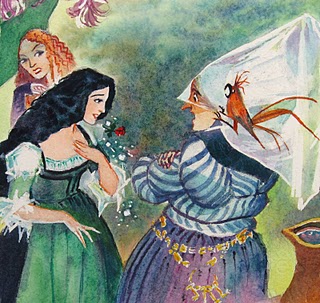
The girls, more often than not, only function in a polarizing, didactic manner. For instance, take the “Diamonds and Toads” fairy tale. One daughter is kind to various creatures and thus rewarded with precious stones coming out of her mouth. The other daughter is rude and therefore has to endure vile creatures to come from her mouth. They are hardly ever biological sisters, and are never twins. They are most likely never equal protagonists due to one being clearly of such rotten character. This is called, in the Aarne-Thompson classification system, the Kind and Unkind Girls (AT 480) and has variations from Japan to England.
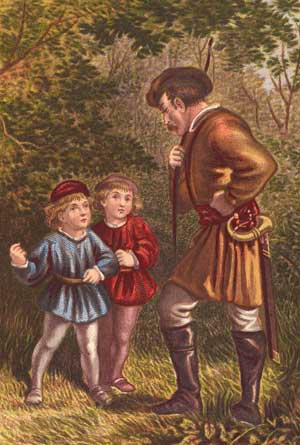
Boys, on the other hand, have much more variety in their depiction in fairy tales, usually erring on the side of beneficial to both. The AT system has multiple entries for brothers, from twin (AT 303) to one of twelve being sought by a sister (AT 451). If the brothers are competing, it’s often for an inheritance, either the kingdom or the estate (AT 402, 545B, 653, 654). The brothers, probably three or four of them, learn trades and compete for the inheritance. Or they need to get the best bride to compete for the inheritance. Basically, whoever impresses Daddy the best gets all the goods. Until Daddy says, “You’re all special and so you all get this house and will all be buried in the same grave.”
Sometimes only If the two brothers are shown as equal protagonists, then they’re twins. They are indistinguishable, in actions and looks, for most of the story until one is mistaken for the other by the other’s wife. The second brother suspects his brother of sleeping with his wife, and then we see a very Biblical episode à la Cain and Abel with an act of fratricide. But death is a fluid thing and the twin is restored to life, allowing the other to realize that his twin had never actually slept with his wife.
This is, of course, a very cursory overview of primarily European fairy tales. We could spend a long time looking at sibling rivalry and relationships in the Bible,Torah, and Quran. All those stories seem like somewhat toxic portrayals of family relationships anyway. I would like, however, to torture you just a little longer and bring another series of stories into the mix. Popul Vuh features multiple sets of twins who act and function as one character, just with twice as many arms. We even see the twins exclusively talk as one entity, which is a little creepy.
I am, of course, talking about Hunahpu and Xbalanque, the Mayan Hero Twins. Mayan mythology in general is a great case study for duality. Almost everything is introduced in pairs. The Lords of Xibalba are paired as such:
- One Death and Seven Death
- Scab Stripper and Blood Gatherer
- Demon of Pus and Demon of Jaundice
- Bone Scepter and Skull Scepter
- Wing and Packstrap
- Bloody Teeth and Bloody Claws
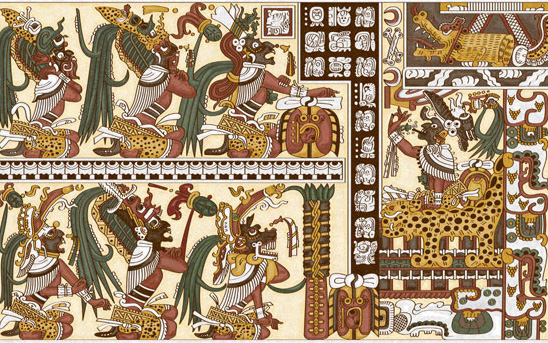
Those are the people you invite to a party. I love these names, they’re just plain awesome. I appreciate how Mayan mythology has such visceral and physical elements. No one likes to talk about pus and stripping scabs, but Mayan mythology just says, “These are the facts of life. So now they’re part of your religion.” I am down with this sort of acceptance of the nasty.
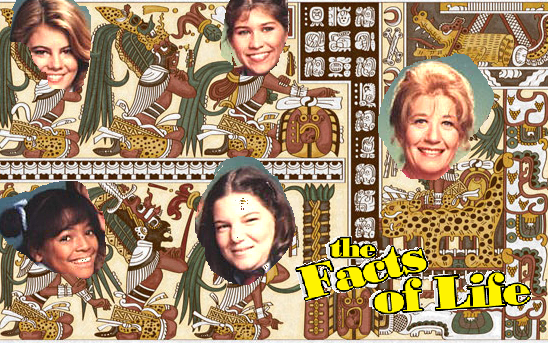
But none of that has to do with the Hero Twins. There are a few thought-provoking elements when looking at the twins. First off, Hunahpu and Xbalanque come from the severed head of another twin, One Hunahpu. Wanna know the name of his twin brother?
Seven. It’s Seven Hunahpu.
So One gets a wife. And Seven doesn’t. In fact, Popol Vuh is very clear in this. “He’s just a partner and just secondary; he just remains a boy.” Er…okay, that sucks for Seven Hunahpu. They have a pretty good life together, though. One Hunahpu has two sons with his wife. They all live together and play ball. But then the Lords of Xibalba are bothered by all this noise and decide to teach One and Seven Hunahpu a lesson. The brothers are invited down for a good ol’ game of Mayan ball. They are put in an impossible position through a series of tests, ultimately failing, and are sacrificed. But even in death is Seven Hunahpu a second-rate brother; One Hunahpu’s head is severed, put in a tree (for whatever reason), and brings forth amazing calabash fruit. Seven Hunahpu and his brother’s body are just buried and forgotten.
Then One Hunahpu’s head spits into the hand of a Xibalban girl, Blood Gatherer, impregnating her with our hero twins, Hunahpu and Xbalanque. And, for the most part, they follow the path of most twin brothers in mythology and folklore and do all the same things together. We see them grow up, turn their older brothers into monkeys, run them out to the woods, and head down to Xibalba to avenge their fathers’ death (because somehow both One and Seven Hunahpu are their fathers). Everything is going pretty well, they’re passing the various tests in the various houses until Hunahpu goes and gets his head taken off by a snatch-bat.
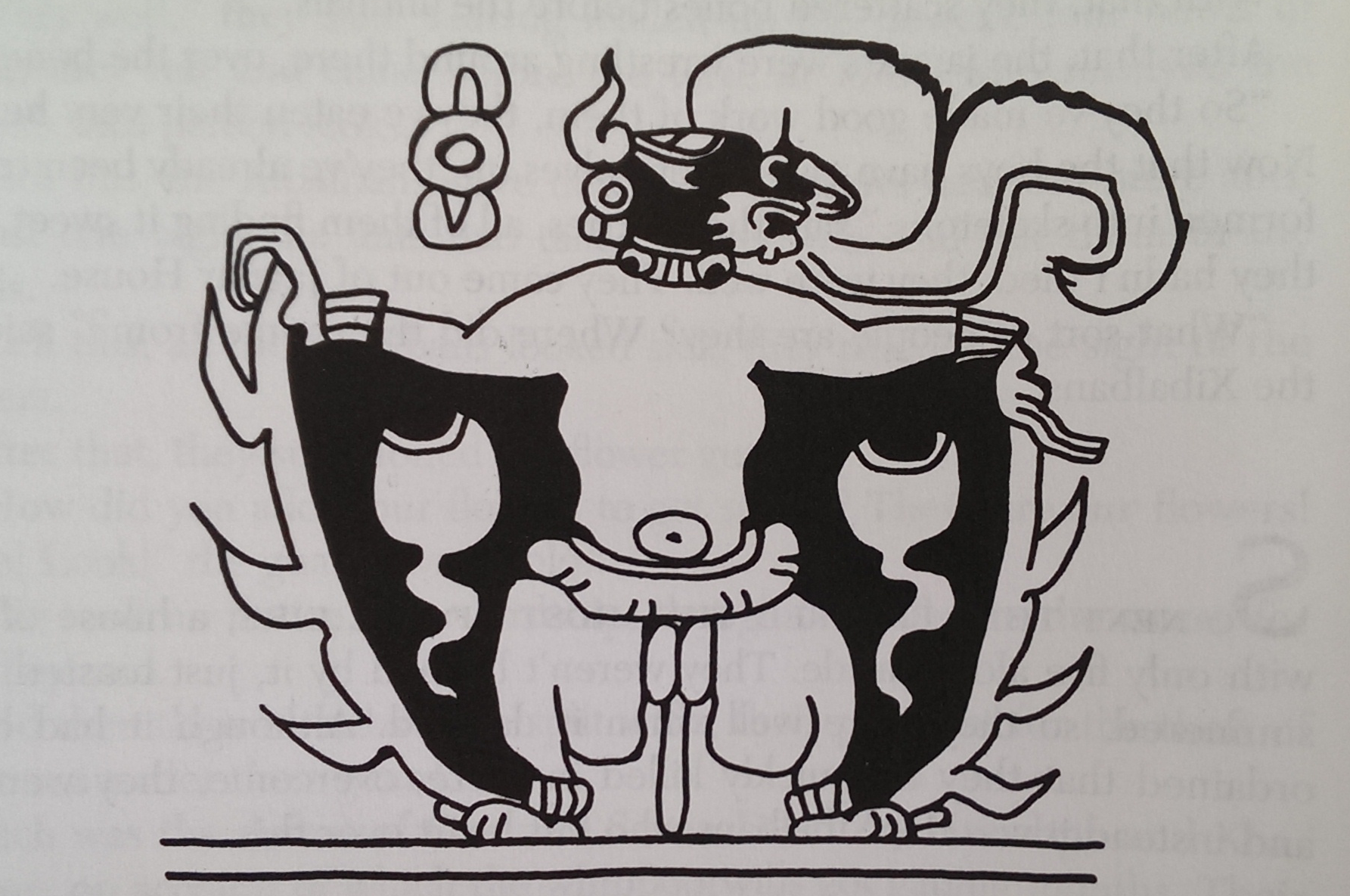
Xbalanque saves the day by making a new head for his twin and comes up with a diversion plan to win the ball game against Xibalbans where Xbalanque does all the action and Hunahpu antagonizes the Lords. They end up tricking the Lords into chasing a rabbit, during which time they steal back Hunahpu’s head, restoring him, and evening the playing field, so to speak, leading to their victory.
There are various other episodes in their lives where Hunahpu gets maimed (when defeating Seven Macaw) and then fixed. Or how about when he got repeatedly killed for show (when they finally defeat the Lords of Xibalba) and then brought back to life. Overall, Hunahpu has a rough go of it.
So this long storytime has led me to some observations.
- Twins usually function as one entity.
- Until they don’t. And then one gets the real short end of the stick.
If I had another day and all the patient readers in the world, I could bring in Navajo mythology with their hero twins (in some versions they even have twin women!), but I think I’ll end my mythology lesson here for now. What I am taking away, however, is that when a story has multiple leads, particularly two, unusual experiential depictions get to happen. As humans, we like things to fall into dualities and polarities. Mythologically, we can see that we’ve been most comfortable with exploring diverse experiences through this dual model.
But television and film have allowed us to get more character perspectives without being weighed down by an entire pantheon. Ensemble shows give viewers meaty narratives and characters to have fun with. But the diversity isn’t as highlighted when you have so many variables. Gender, age, background, race…diversity becomes simplified to representative, token characters. When the diversity is limited, through gender in the case of Orphan Black or Frozen, the focus is brought back to exploring disparate yet valid experiences that we viewers are more likely to connect with.
Let me know in the comments if there are any shows/movies/stories that you feel support or refute this perspective on multiplicity.
So that’s this week’s post! It felt good to be able to look at a screen after a week of being too ill to do anything. I want to say thanks to my friends Ajit and Strix for bringing my attention to the original New York Times article linked above which started my mind spinning. I also wanted to plug my podcast, The Hermit Cave, where we’ve been talking about Survivor and the movies we’ve seen during the month of April. Go listen to my raspy voice!
 mythic ramblings